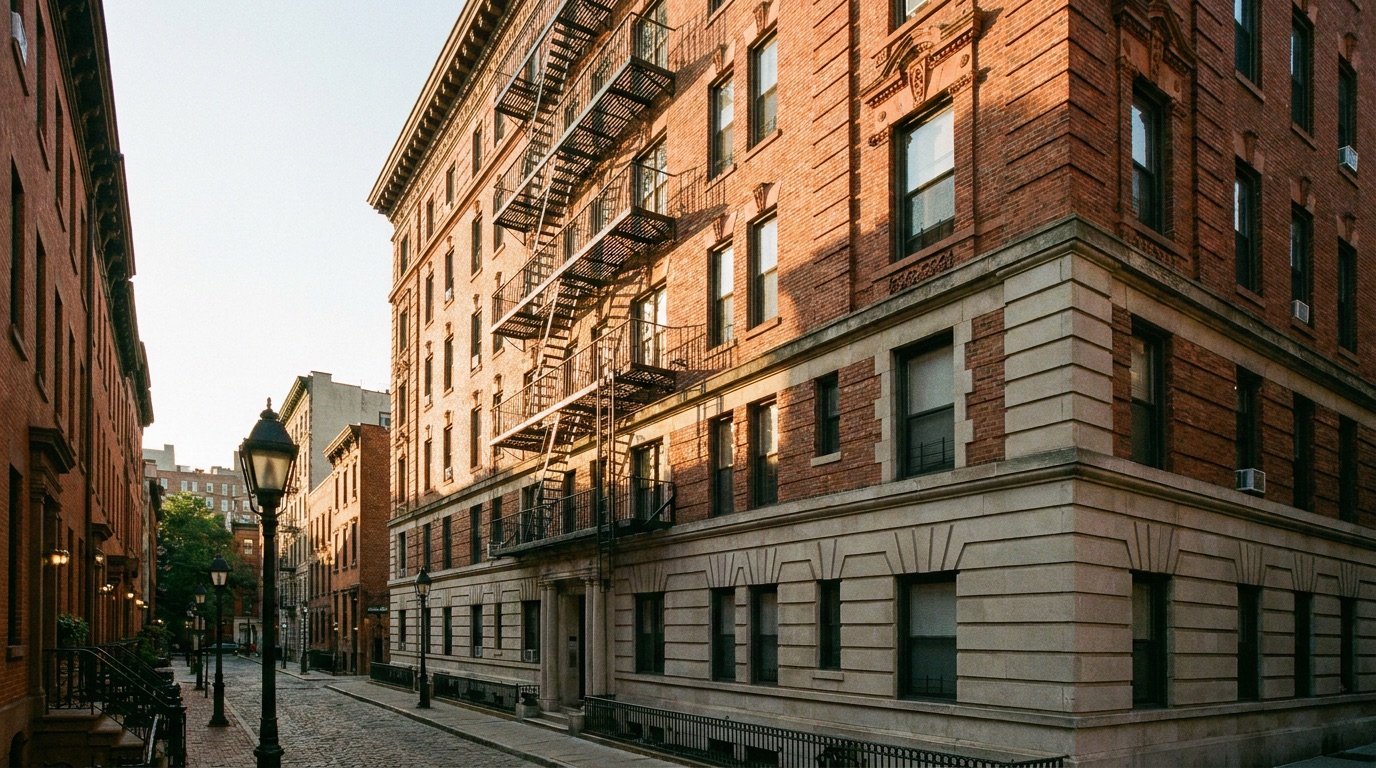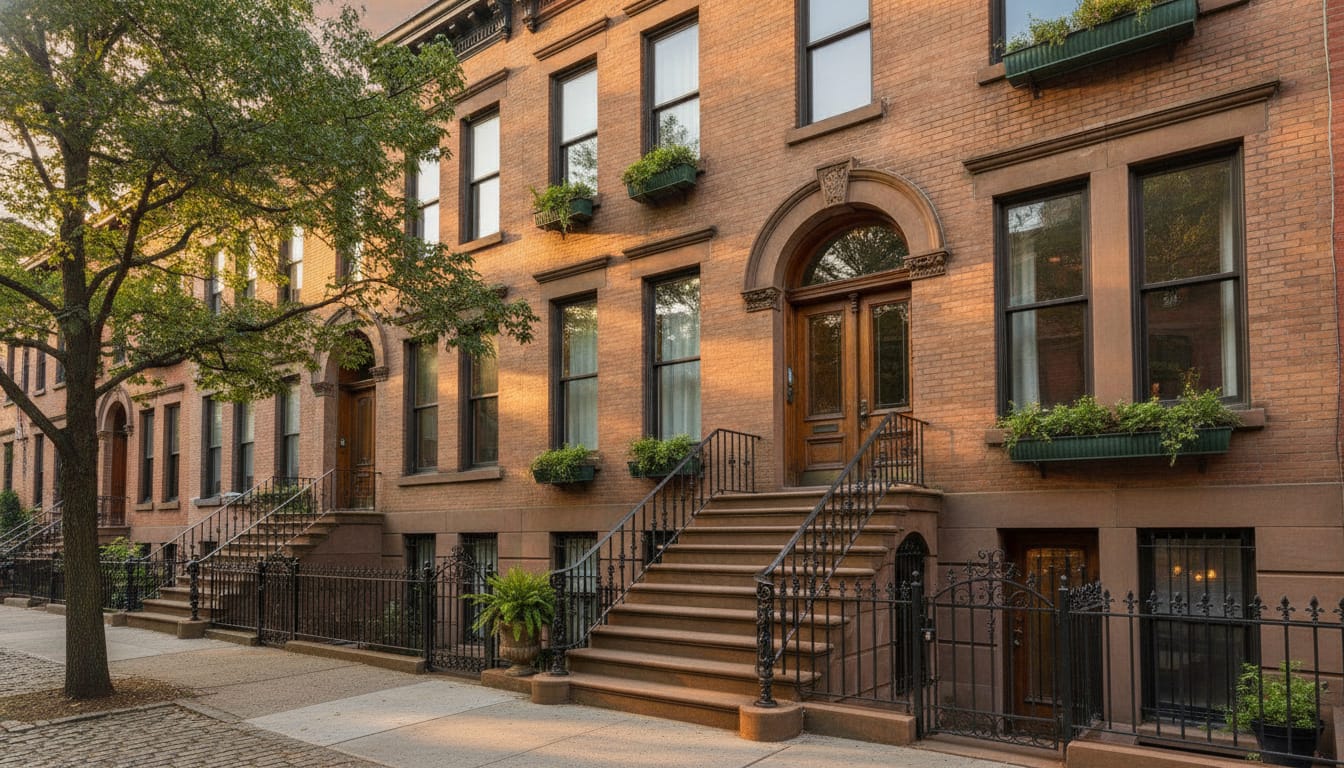
Boston's median condo price crossed $750,000 in early 2026, making it the only major US metro whose residential market directly overlaps with comparable NYC inventory. For Boston buyers relocating to New York, the price conversation is not a shock. The co-op conversation is. Boston has no equivalent to the NYC co-op board process. No Massachusetts transaction requires a board of shareholders to vote on whether to admit you before you can complete a purchase. In NYC, roughly 75% of apartments sold are co-ops, and that vote is real.
In my 25+ years handling relocations, Boston buyers are the easiest to brief on price and the hardest to brief on the co-op system. They arrive thinking they understand urban real estate. They understand half of it.
Massachusetts vs. New York Tax
Massachusetts has a flat income tax rate of 5% (9% on certain capital gains). New York State's top rate is 10.9%, and NYC residents add 3.876%. For a Boston buyer earning $200,000 per year, the move to NYC adds approximately $18,000-$20,000 in annual state and city taxes. Unlike Texas or Florida buyers who have never paid state income tax, Boston buyers already model this expense. The delta is meaningful but not destabilizing for most relocating professionals, particularly those whose NYC compensation packages reflect the cost-of-living differential.
What Boston Condo Equity Buys in NYC
A Boston buyer who purchased a South End condo for $550,000 in 2018 and sells in 2026 for $800,000 clears approximately $190,000 after agent fees, Massachusetts state capital gains (5%), and federal capital gains. In NYC, that is a 20% down payment on a $950,000 purchase. At that price point in 2026:
- A one-bedroom co-op in Manhattan's Upper East Side or Upper West Side with pre-war details and elevator
- A two-bedroom co-op in Astoria or Sunnyside with a 25-minute subway to Midtown
- A one-bedroom condo in Brooklyn Heights or Cobble Hill with Manhattan Bridge views
Neighborhoods Boston Buyers Gravitate Toward
Upper East Side (Manhattan): Boston Brahmin culture and the UES overlap considerably. Pre-war co-ops, low-traffic residential blocks, proximity to Central Park, and a low-key formality that is different from the rest of Manhattan. Boston buyers who come for finance, medicine, or law tend to land here. Two-bedroom co-ops run $900K-$2M.
Brooklyn Heights: The brownstone character, the historic preservation, the esplanade with harbor views, and the proximity to Downtown Brooklyn remind Boston buyers of Beacon Hill. The low-traffic residential pace is unusual for NYC. Two-bedroom co-ops start around $950K, brownstone townhouses at $3M+.
Upper West Side (Manhattan): For Boston academics, researchers, and those coming from Cambridge specifically, the intellectual density of the UWS, its proximity to Columbia University and the Museum of Natural History, and the pre-war apartment stock make it a natural landing zone. Similar price to UES.
Cobble Hill and Carroll Gardens (Brooklyn): Boston buyers who want the Charlestown or South End brownstone aesthetic without the formality of Brooklyn Heights tend to land here. More relaxed street life, a growing restaurant scene, and a slightly lower price point. Two-bedroom co-ops at $850K-$1.3M.

Available Now in Manhattan and Brooklyn
Active listings in the neighborhoods Boston buyers most often target.

577 Grand Street #F1607
Lower East Side

455 Fdr Drive #B1203
Lower East Side
Listing information provided courtesy of the Real Estate Board of New York's Residential Listing Service (RLS). Information is deemed reliable but not guaranteed. Sale listings verified. ©2026 REBNY. RLS data displayed by Keller Williams NYC.
Four Ways NYC Real Estate Differs from Boston
The co-op board is real and not optional. Boston has no co-op approval process. Massachusetts buyers are accustomed to a standard P&S (Purchase and Sale) agreement process where the only approval is lender underwriting and inspection. In NYC co-ops, the board of directors reviews your full financial and personal dossier and votes to admit or decline you. A rejection is possible, does not require explanation, and is not reversible for that building. Strong financials and a well-assembled package reduce but do not eliminate this risk.
Attorneys are mandatory. Massachusetts closings can use a title company. NYC requires a licensed real estate attorney on each side, from contract negotiation to the closing table. The attorney's work is substantive, not administrative. Budget $3,000-$4,500 and hire before the offer is verbally accepted.
The contract is negotiated from scratch. Massachusetts uses a standard P&S form. NYC contracts are drafted by the seller's attorney and negotiated line-by-line by the buyer's attorney. What protections you get depends on what your attorney negotiates into the riders. Do not assume any contingency exists unless you confirmed it with your attorney.
Closing costs are higher. Massachusetts closing costs run 2-3% of the purchase price. NYC buyers pay 3-6%, including mansion tax on purchases over $1M, mortgage recording tax for condos, and attorney fees. The mansion tax tiers from 1% to 3.9% depending on price and applies to the full purchase price, not just the amount over $1M.
Your 5-Step Boston-to-NYC Checklist
- Budget for the mansion tax at contract time, not at closing. Boston buyers at the $1M+ price point are almost universally surprised by this cost. On a $1.1M purchase, the mansion tax is $11,000. On a $1.5M purchase, it is $15,000. See the mansion tax guide for the full bracket table.
- Assemble your financial documents before contract. The board package timeline starts when you sign the contract. Three years of federal returns, 6 months of bank statements, employment verification letter. Boston buyers are generally organized. Use that to your advantage and get the package submitted within two weeks of contract signing.
- Hire a NYC-licensed attorney before you make your first offer. The verbal offer goes in through the agent; the attorney review of the draft contract begins within 24-48 hours of acceptance. Have your attorney retained in advance.
- Confirm your lender is approved by target buildings. Not all mortgage lenders are on the approved lender lists for every co-op building. Verify with the managing agent before applying.
- Plan for a 90-day close on a co-op. Boston closings run 30-45 days from P&S. NYC co-op closings run 60-90 days because the board process adds mandatory weeks. Coordinate your Boston lease termination or property sale timeline accordingly.
Moving to NYC from Boston?
Milton Coste provides full buyer representation across all five boroughs. 25+ years of NYC co-op and condo closings. Schedule a call before you start your search.
Schedule a Free ConsultationRead the complete NYC real estate guide for newcomers for the borough-by-borough price breakdown. For the Massachusetts capital gains on your Boston home sale, see the capital gains tax guide. And for what to expect at the NYC closing table, see the NYC closing process timeline.