Chicago's median condo price sits around $375,000 in 2026, roughly 40% below comparable inventory in Brooklyn and 65% below comparable Manhattan inventory. Of all the major-city transplants arriving in New York, Chicago buyers have the smallest lifestyle adjustment to make, and the largest price adjustment. They already understand transit, they already understand density, and they already understand cold. The question is whether they can close the equity gap or absorb the price difference in their budget.
In my 25+ years handling NYC relocations, Chicago buyers are consistently among the most prepared clients I work with. They have lived in a real city. They know what a doorman building looks like. What surprises them is the co-op system, which has no equivalent in Illinois, and the magnitude of the price difference on a per-square-foot basis.
Illinois vs. New York Tax
Illinois has a flat personal income tax rate of 4.95%. New York State's rate reaches 10.9% at the top. NYC residents add another 3.876%. For a Chicago buyer earning $200,000 per year, the tax increase is approximately $20,000-$22,000 annually. That is real money and belongs in the budget before you set a maximum purchase price. Unlike Texas and Florida buyers who arrive with zero state tax history, Chicago buyers already factor state tax into their planning, which makes the NYC adjustment easier to model even if the dollar figure is larger.
The Price Gap: What It Means in Practice
A Chicago buyer selling a two-bedroom Lincoln Park condo for $650,000 after buying it for $400,000 in 2016 clears roughly $175,000 after agent fees and federal capital gains. Illinois has no state capital gains tax. In NYC, $175,000 is a 20% down payment on an $875,000 purchase, which buys:
- A one-bedroom or small two-bedroom co-op in Astoria or Sunnyside with 25-minute subway access to Midtown
- A two-bedroom co-op in Washington Heights or Inwood with Hudson River views and express subway service
- A one-bedroom condo in Prospect Heights or Crown Heights in Brooklyn
Chicago buyers who are buying without selling a Chicago property first, or who are moving for a corporate relocation with a lump-sum package, often target the $500K-$700K range in Queens or Upper Manhattan where their Chicago savings can cover a meaningful down payment without exhausting reserves.
Neighborhoods Chicago Buyers Gravitate Toward
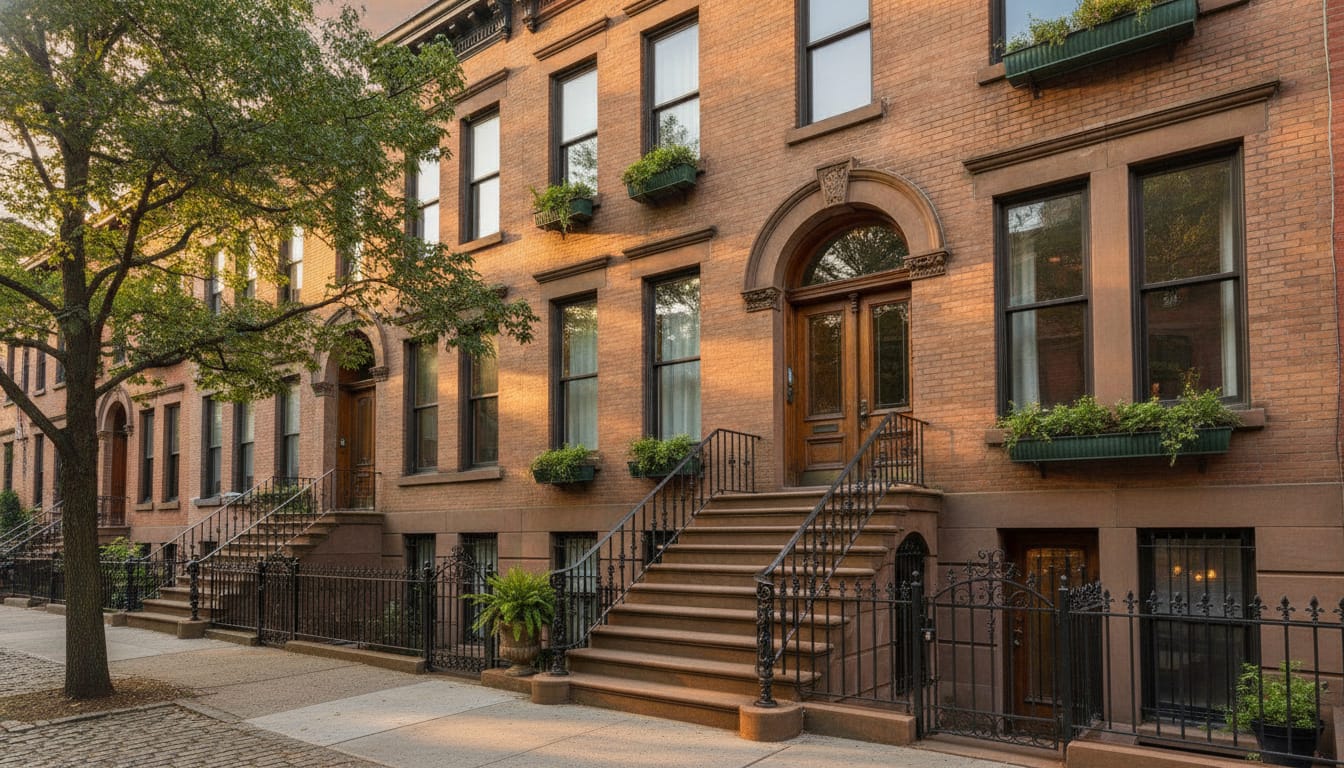
Park Slope and Prospect Heights (Brooklyn): The brownstone row-house architecture, tree-lined blocks, and neighborhood-scale retail remind Chicago buyers of Lincoln Park, Old Town, and Wicker Park. Park Slope is quieter and more residential; Prospect Heights is more culturally active. Two-bedroom co-ops run $850K-$1.3M.
Astoria (Queens): Chicago buyers who prioritize value per dollar and transit access over Manhattan proximity consistently land in Astoria. The neighborhood has genuine character. No two blocks look alike, the food scene is one of NYC's strongest, and the transit is reliable. Two-bedroom co-ops at $550K-$750K offer the best price-to-quality ratio of any transit-connected NYC neighborhood for Chicago-level budgets.
Long Island City (Queens): Chicago tech and finance workers landing at a Manhattan office with a preference for newer construction find LIC offers the most comparable product to Chicago's River North and Fulton Market condos, at similar price points and with direct Midtown subway access.
Upper West Side (Manhattan): For Chicago buyers who want pre-war architectural character, the kind you find in Chicago's Greystone apartments, the UWS delivers. Herringbone hardwood floors, plaster ceilings, and building staff that knows your name. Two-bedroom co-ops run $900K-$1.6M.

Available Now in Brooklyn and Queens
Active listings in the neighborhoods Chicago buyers most often target.

1199 E 53rd Street #6P
East Flatbush

155-01 90th Avenue #3-A
Jamaica
Listing information provided courtesy of the Real Estate Board of New York's Residential Listing Service (RLS). Information is deemed reliable but not guaranteed. Sale listings verified. ©2026 REBNY. RLS data displayed by Keller Williams NYC.
Three Chicago Assumptions That Do Not Hold in NYC
Co-ops are not condos. Chicago condos and Illinois co-ops are legally similar and functionally interchangeable from a buyer's perspective. NYC co-ops are fundamentally different: you are buying shares in a corporation, not real property. The board of directors votes on whether to admit you. The proprietary lease governs what you can do with the unit. There is no equivalent in Chicago real estate and no shortcut to understanding it. Read the NYC closing process guide before you make your first offer.
Closing costs are higher. Chicago buyers are used to paying 2-3% in closing costs. NYC buyers pay 3-6%, including the mansion tax on purchases over $1M (1% to 3.9%), mortgage recording tax, and attorney fees for both sides. Budget this separately from your down payment.
The attorney is required. Illinois closings can be handled by title companies. NYC requires a licensed real estate attorney on both sides from contract to closing. This is not a luxury. It is mandatory, and the attorney's job is substantive: negotiating the contract rider, reviewing building financials, coordinating with the lender, and attending the closing table.
Your 5-Step Chicago-to-NYC Checklist
- Recalibrate your price expectations by neighborhood. Chicago's $400K budget for a two-bedroom becomes a $650K budget for a comparable one-bedroom in Brooklyn, or a genuine two-bedroom in Astoria or Upper Manhattan. Neighborhood selection is where most Chicago buyers find their financial comfort zone.
- Model the Illinois-to-New York tax shift with a CPA. The $20,000+ annual increase for a mid-income earner is manageable but should be built into your mortgage payment calculation before setting a maximum bid.
- Compile board package documents before you start searching. Chicago's condo approval process is a quick credit and application check. NYC co-op board packages take 2-3 weeks to assemble and require the same documents as a mortgage application plus personal reference letters. Start early.
- Get a NYC co-op lender pre-approval. Your Chicago lender may not be licensed to originate New York co-op loans. Find a New York lender first, then verify they are on the approved lender list for the specific buildings you are targeting.
- Hire your NYC attorney before you make your first offer. The verbal offer goes in through the agent; the contract negotiation between attorneys starts immediately after acceptance. Same-day turnaround is common. Have your attorney retained before you start actively bidding.
Moving to NYC from Chicago?
Milton Coste has guided Midwestern buyers through NYC's co-op and condo market for 25+ years. All five boroughs, English and Spanish service.
Schedule a Free ConsultationSee the complete NYC real estate guide for newcomers for the borough-by-borough overview. For the closing process, see the NYC closing timeline.