Over two million New Yorkers live in rent-stabilized apartments, and as of January 26, 2026, every one of their buildings must publicly disclose that fact. Local Law 86, the Rent Transparency Act, now requires landlords to post bilingual notices identifying rent-stabilized units. In my experience working with both property owners and tenants across Manhattan, Brooklyn, Queens, the Bronx, and Staten Island, this is the biggest transparency shift in NYC rental housing since the Rent Guidelines Board reforms. My work placing renters in rent-stabilized units has been covered in the press.
Non-compliant buildings face enforcement actions from the Department of Housing Preservation and Development (HPD). Here is what landlords, brokers, and tenants need to know.
Understanding the Rent Transparency Act (Local Law 86)
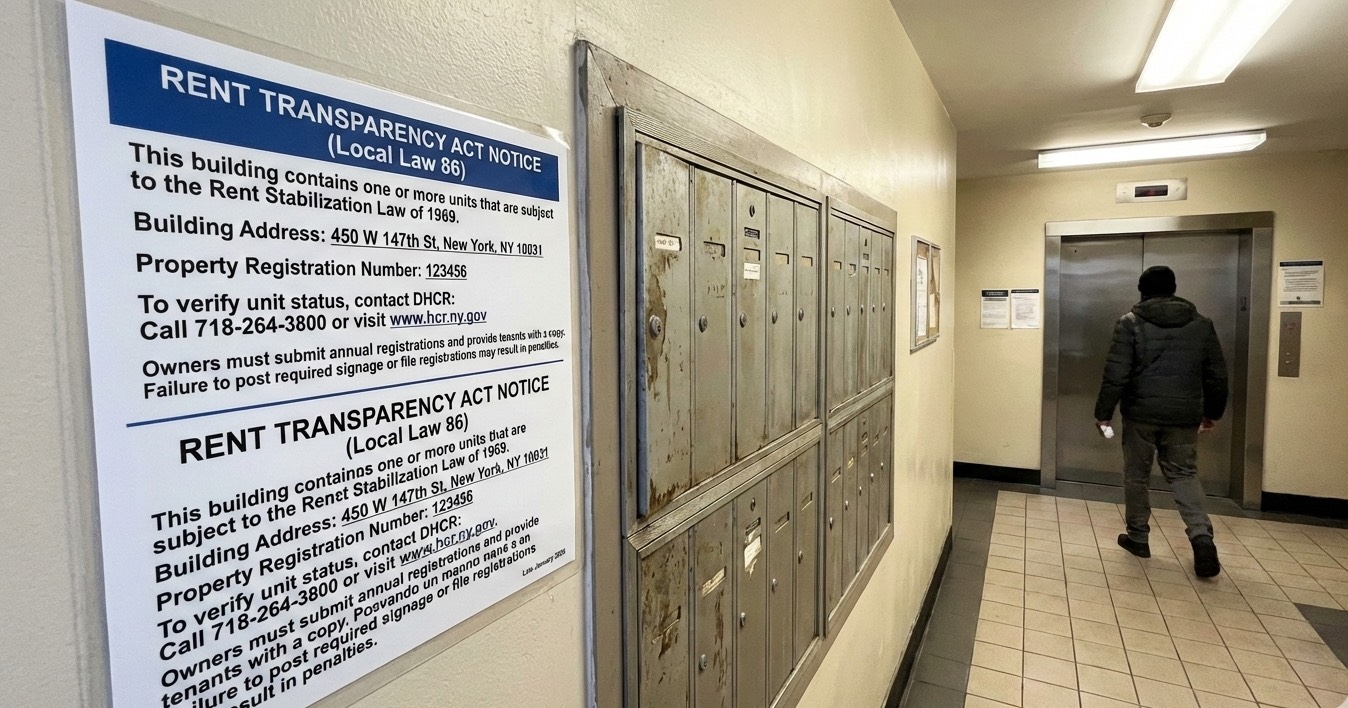
The Rent Transparency Act requires owners of all multiple dwellings containing at least one rent-stabilized unit to post a public notice within the building. These notices must be placed in a conspicuous common area, such as a lobby or building entrance, where they are easily visible to all current residents.
To ensure accessibility for all New York residents, the law mandates that these signs be posted in both English and Spanish.
Key Notice Requirements for Landlords
To meet the standards for legal compliance, the posted notice must include specific language and information to help tenants verify their status. The notice must contain:
- Mandatory Statement: A declaration stating: "This building contains one or more units that are subject to the Rent Stabilization Law of 1969"
- Property Details: The building's specific address and its property registration number
- DHCR Contact Information: Clear instructions on how to contact the New York State Division of Housing and Community Renewal (DHCR) to verify if a specific unit is registered. This includes the phone number 718-264-3800 and the website www.hcr.ny.gov
- Owner Responsibilities: A reminder that owners must submit annual registrations to the DHCR and provide tenants with a copy of their unit's registration information
- Penalty Warning: A notification that building owners who fail to file required registrations or post the necessary signage may be subject to penalties
Impact on Brokers and Professional Obligations
For real estate brokers, the Rent Transparency Act reinforces a broader professional obligation toward transparency in advertising and client representation. As enforcement efforts in NYC focus increasingly on making sure tenants have the information they need about where they live, brokers must ensure all listings are accurate and transparent.
This shift aligns with other recent transparency measures, such as the FARE Act, which impacts how broker fees are disclosed and handled to ensure tenants are not hit with unexpected costs. By staying informed on the rent-stabilized status of building units, brokers can guide clients through the market with confidence, ensuring all fees and rights are clearly understood upfront.
May 2026 enforcement update: HPD has confirmed in public comments that inspectors are now actively checking for the bilingual notice during routine cycle inspections, and the first wave of fines has been issued against repeat offenders in Upper Manhattan and the Bronx. Owners should treat this as a hard compliance item, not a soft signage suggestion.
The Benefits of Compliance
Prioritizing compliance with the Rent Transparency Act offers significant benefits for all parties involved in the NYC real estate market:
For Landlords
Clear signage helps avoid disputes and potential litigation by providing legal clarity from the start. It also ensures buildings pass HPD inspections, as staff will now check for this signage during routine visits.
For Tenants
The law acts as a critical safeguard against the illegal deregulation of affordable housing. It empowers renters to spot illegal rent hikes and identify if they are being overcharged.
For Brokers
Maintaining a track record of transparency and adherence to new laws builds trust with clients and avoids the professional risks associated with misrepresenting a property's status.
Take Action: Ensure Your Building is Compliant
Building owners should act immediately to post the required notices. Official templates for the mandated signage are available in English, Spanish, and several other languages to ensure full accessibility for all New Yorkers.
Download Official Notice Templates
Visit the NYC HPD website to download compliant signage templates in multiple languages.
NYC HPD Required Signage Questions? Contact MeRelated Resources
- DHCR (Division of Housing and Community Renewal): www.hcr.ny.gov | Phone: 718-264-3800
- NYC HPD Required Signage: Download Templates
- Check Rent Stabilization Status: DHCR Portal