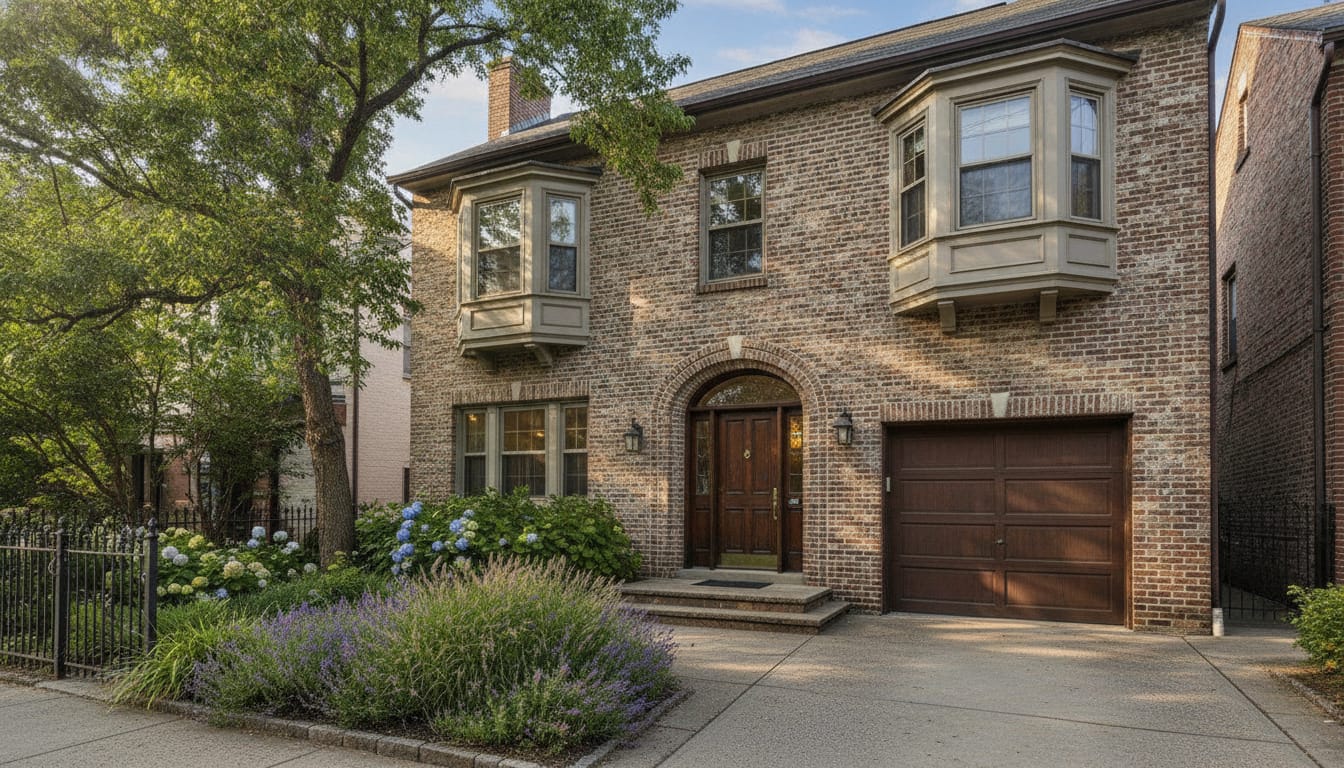
Under IRC section 1015(a), a house you received as a gift keeps the basis it had "in the hands of the donor," so a house your parent bought for $150,000 and deeded to you for $0 is measured from $150,000 when you sell it, not from what it was worth on the day you got it. The $0 on the deed does not mean the house has no history. It means the history came with it.
Across three full market cycles in New York City, the $0 family deed is where I have seen the biggest closing surprises. The owner assumes it is the same as inheriting. It usually is not, and the difference can be the largest number in the whole sale.
This guide covers a house or a 2-to-4 family in the five boroughs, with a note on co-op shares where the rules differ. If the property came to you after a death, through a will or an estate, the inherited property walkthrough is the better starting point.
The four ways a $0 deed happens
Family transfers for nominal consideration come in four shapes. Pull the recorded deed and read it, because the family story and the document do not always match.
- A straight gift deed. The parent signs the house over to a child, the child becomes the owner, and the parent keeps nothing.
- A gift to a child while the parent keeps living there. Same deed, but the parent never moves out. Nothing in the deed reserves that right; it is a family understanding.
- A life estate deed. The parent deeds the house to the child but reserves, in the deed itself, the right to live there for life. The parent is the life tenant and the child holds the remainder.
- A deed into a trust. The parent deeds the house to a trustee. Whether that trust is revocable or irrevocable changes almost everything that follows.
What the buyer's side sees in ACRIS
Every recorded deed in New York City sits in ACRIS, and so does the stated consideration. A family transfer typically shows zero or a token amount. The ACRIS guide walks through how to pull the document yourself, and you should, because the buyer's attorney and the title company will pull it the day the contract arrives.
They ask about it because a transfer for nothing raises questions a sale does not: was it really a gift, did the giver keep any interest, was there a trust behind it, and were the transfer tax returns filed.
The returns that were due even at $0
When nothing is paid, there is usually no transfer tax to pay. There are still returns to file. NYC Administrative Code section 11-2105(a) requires a joint return from grantor and grantee "for each deed whether or not a tax is due thereon," filed within thirty days after delivery of the deed and before it is recorded. That is the NYC-RPT. The state rule is Tax Law section 1409(a), which requires a joint return "for each conveyance whether or not a tax is due thereon," filed before the deed may be recorded. That is the TP-584-NYC.
Because both returns are a condition of recording, a deed that shows up in ACRIS almost always had them filed. The real trouble is the family deed that was signed at a kitchen table and never recorded at all. On paper the parent still owns the house, and the title company will not insure a sale by the child until that old deed is recorded with its returns, or replaced. Late filings can carry interest and penalties under section 11-2114. Find this out before you list, not after a buyer's attorney finds it for you.
Co-op shares work differently
A co-op apartment moves by stock and proprietary lease, not by deed, and the transfer usually needed board consent. The city and state returns still apply to the share transfer. For the capital gains exclusion, IRC section 121(d)(4) applies the ownership test to the shares and the use test to the apartment itself.

Active Brooklyn and Queens listings
Houses and small buildings currently for sale in Brooklyn and Queens

1638 8th Avenue #1Q
Park Slope

168 Plymouth Street #7A
Dumbo
Listing information provided courtesy of the Real Estate Board of New York's Residential Listing Service (RLS). Information is deemed reliable but not guaranteed. Sale listings verified. ©2026 REBNY. RLS data displayed by Keller Williams NYC.
Basis: the number that decides the tax
Your taxable gain is the sale price, less selling costs, less your basis. How you got the house decides the basis.
Gift deed. Carryover basis under section 1015(a). You step into the giver's shoes: their purchase price plus the improvements they documented. If nobody kept the improvement receipts, the basis stays lower.
Life estate deed. Section 2036(a) pulls into the parent's gross estate property the parent transferred while retaining "the possession or enjoyment" of it for life. Section 1014(b)(9) then gives property included in the gross estate a basis equal to fair market value at death. So when the life tenant dies, the remainder holder generally takes a stepped-up basis. That step-up is the main tax difference between a life estate deed and a plain gift deed.
Gift while the parent stays. Section 2036 reaches retained enjoyment "by trust or otherwise," and whether an unwritten family arrangement is enough to trigger it is a question for a tax attorney, not something to assume. Plan as if the child holds carryover basis until an attorney tells you otherwise in writing.
Revocable trust. Nothing changes for tax. Under section 676 the grantor is treated as the owner while the power to revoke exists, and section 2038 keeps the property in the grantor's gross estate, which preserves the step-up at death. The living trust guide covers the mechanics of that transfer.
Irrevocable trust set up as a completed gift. Carryover basis, the same as a gift deed, unless the trust terms pull the property back into the grantor's estate. If the building is still in the trust when you sell, the guide to selling a building held in trust covers who signs and what the title company wants from the trustee.
Selling a property that came to you through family? Start with the paperwork checklist.
See the Inherited Property GuideA worked example, with round numbers
This is an illustration, not a market figure. Say a parent bought a two-family for $150,000, spent a documented $50,000 on improvements over the years, and later deeded it to a child for $0. The child sells it for $1,200,000.
| Example only | Gift deed (carryover) | Step-up at death |
|---|---|---|
| Sale price | $1,200,000 | $1,200,000 |
| Basis | $200,000 ($150,000 plus $50,000 documented improvements) | $1,100,000 (say the value at death) |
| Gain before selling costs | $1,000,000 | $100,000 |
Same house, same price, and a $900,000 difference in the gain. Selling costs reduce both figures, and the rate that applies depends on the seller's own return. The capital gains guide covers how that part is calculated.
The primary residence exclusion only helps whoever lived there
Section 121 lets a seller exclude up to $250,000 of gain, or $500,000 on a joint return when the statute's conditions are met, if the seller owned the home and used it as a principal residence for periods adding up to two years during the five years before the sale. Both tests belong to the seller.
That is where the gift-while-the-parent-stays arrangement hurts. The child owns the house but never lived there, so the child fails the use test. The parent lived there but no longer owns it, so the parent eventually fails the ownership test. The exclusion that would have covered a large part of the gain can end up belonging to nobody.
Who has to sign when a life tenant is alive
A buyer is purchasing the whole house, and during the parent's lifetime the whole house is split between the life tenant and the remainder holders. The contract and the deed need the life tenant and every remainder holder. If one sibling holding a share of the remainder will not sign, there is no sale. A sale during the life tenant's lifetime also means no death has happened, so there is no step-up: the remainder holders' share is measured from carryover basis. How the price and any exclusion divide between the life tenant and the remainder holders is a question for the accountant before anyone signs a contract.
The four routes side by side
| Gift deed | Life estate deed | Revocable trust | Inheritance | |
|---|---|---|---|---|
| Who signs to sell | The child who received it | Life tenant plus every remainder holder while the life tenant is alive; remainder holders after death | The trustee | The executor or administrator, or the heirs once title passes to them |
| Basis at sale | Giver's basis, IRC 1015(a) | Stepped up at the life tenant's death, IRC 2036 and 1014(b)(9); carryover if sold before | Unchanged while the grantor lives; stepped up at death, IRC 2038 and 1014 | Value at date of death, IRC 1014(a) |
| Section 121 available to | The child, only if the child owned and lived there two of the last five years | Only a person who meets both tests; get an accountant's read before a lifetime sale | The grantor, treated as owner under IRC 676 | The heir only on the heir's own ownership and use |
| What the title company wants | The recorded gift deed with its NYC-RPT and TP-584-NYC | The recorded life estate deed; a death certificate if the life tenant has died | The recorded deed to the trustee and the trust document or a certification showing the trustee's power to sell | Surrogate's Court letters, or proof of how title passed |
One more reason families use these deeds: Medicaid
Many of these transfers were made with nursing home costs in mind. New York's Department of Health states that the look-back period for nursing home Medicaid is the 60 months immediately before the date a person is both institutionalized and has applied. If a parent's care is part of the picture, have an elder law attorney look at the dates before anything is sold.
What to do before you list
- Pull the deed from ACRIS. Confirm which of the four routes you have, and whether anything was reserved to the parent.
- Confirm the returns. The NYC-RPT and TP-584-NYC for the $0 transfer, or a plan to record an unrecorded deed properly.
- List every signer. For a life estate, every remainder holder, with a current address.
- Get the tax number first. Have an accountant run the gain before you price the house, so the price decision is made with the net in view. The net proceeds calculator handles the closing costs side.
Get the paperwork and the number straight before you list
Milton Coste, Licensed Real Estate Associate Broker, 25+ years in NYC real estate with more than 1,100 transactions across the five boroughs. I am not your attorney or your accountant, but I can tell you what the house is worth and what a buyer's attorney will ask for before a family deed turns into a closing delay.
Start With the ChecklistThis is planning context, not legal or tax advice. Statutory citations are to IRC sections 121, 676, 1014, 1015, 2036 and 2038, NYC Administrative Code sections 11-2105 and 11-2114, and NY Tax Law section 1409, all as of September 23, 2026. The Medicaid look-back is as stated by the New York State Department of Health in GIS 15 MA/07. The worked example uses illustrative round numbers, not market data. Whether an unwritten arrangement to keep living in a gifted house brings it within IRC 2036 depends on the facts. Confirm your own position with a New York attorney and a tax professional before you sign a listing agreement or a contract.