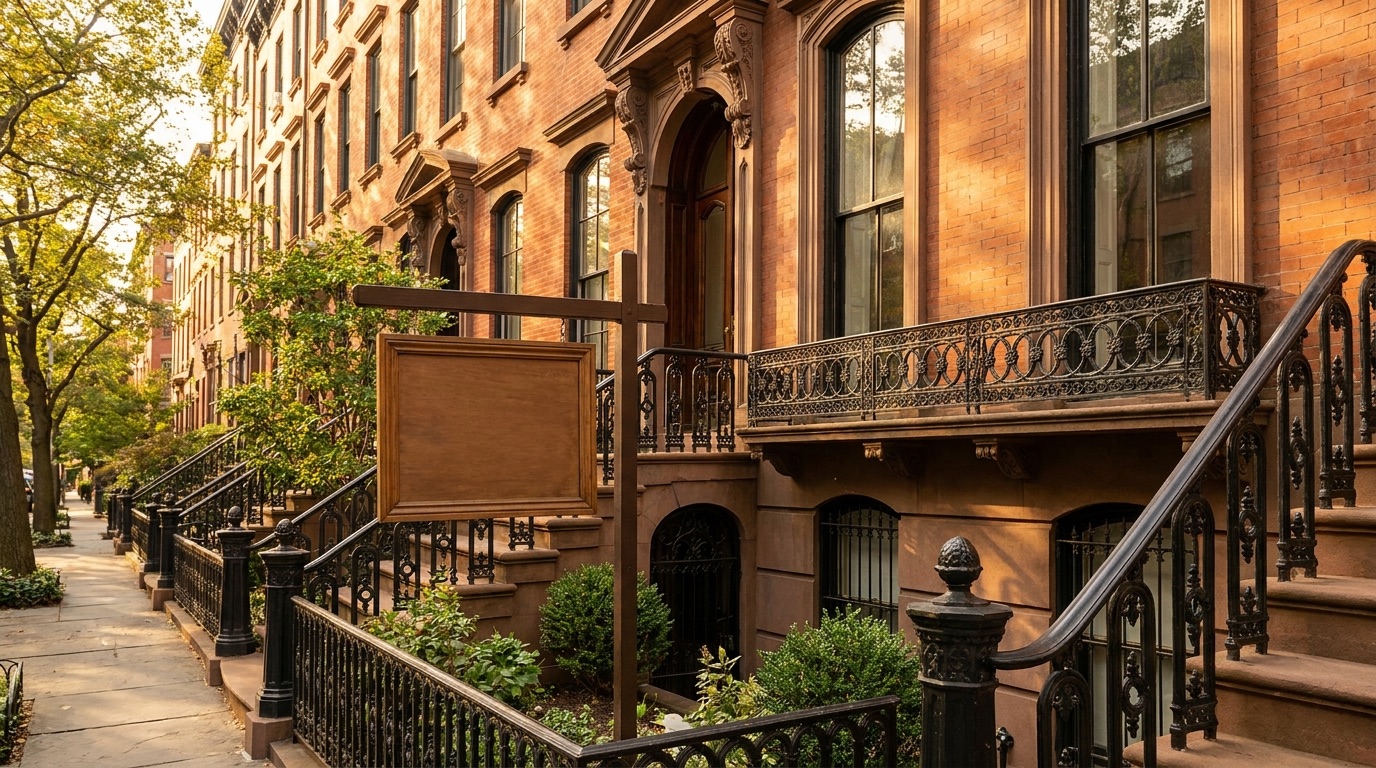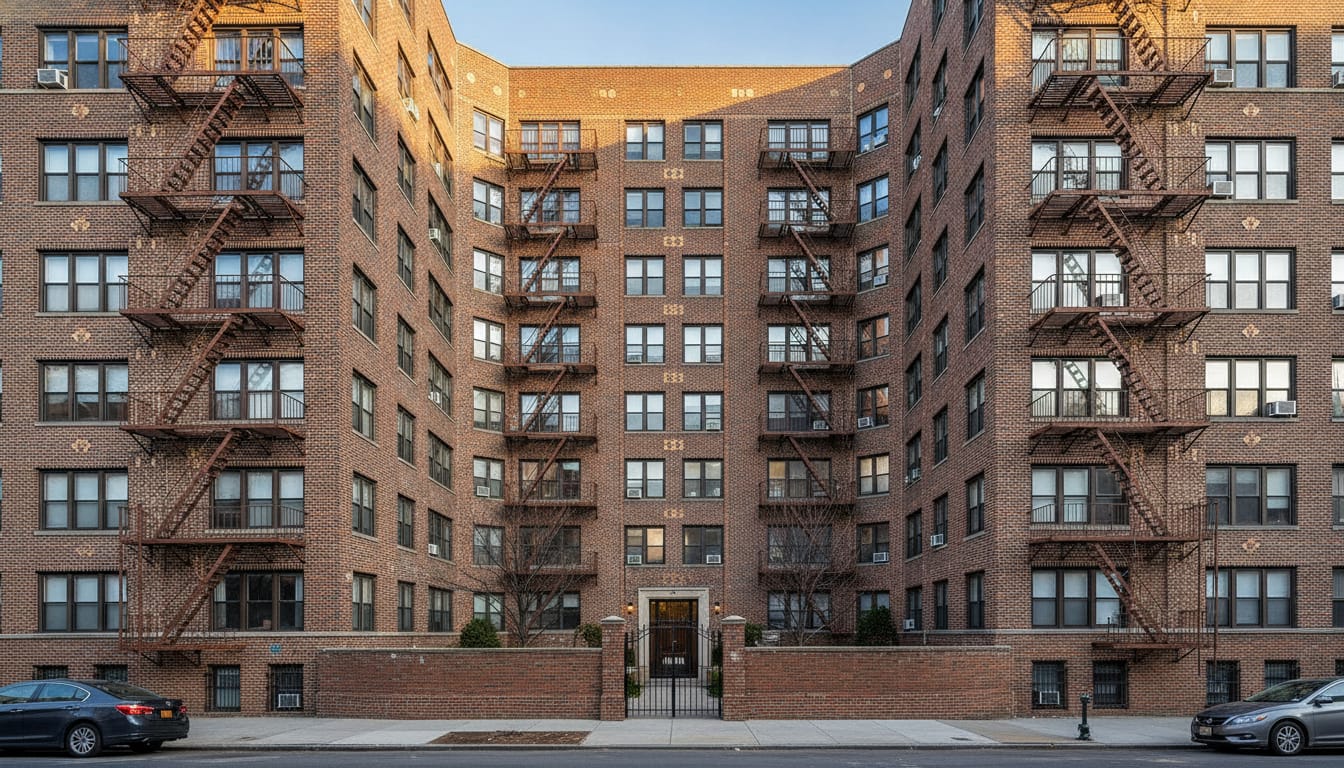
Two NYC apartments can both be called income-restricted co-ops and have almost nothing in common when the owner decides to leave. An HDFC co-op is sold: you hire a broker, you list it, a buyer bids, a board approves. A Mitchell-Lama apartment is surrendered: you give the shares back to the housing company at a price set by formula, and the company sells to the next household on its waiting list. Confusing the two costs sellers months.
I represent buyers and sellers on HDFC co-ops, and as of this writing I have an active HDFC listing, a three-bedroom co-op at 15 Fort Washington Avenue in Washington Heights. The mechanics below are the ones I walk owners through on the phone. The income-restricted apartments guide covers the same programs from the buyer's side.
| Question | HDFC co-op | Mitchell-Lama co-op |
|---|---|---|
| Who buys it | An income-qualified buyer you find on the open market | The housing company, which resells to the next household in order on its waiting list |
| Who sets the price | You do, within whatever ceiling or formula the offering plan imposes | The housing company, subject to HPD approval, by a formula in the rules |
| Is there a broker | Yes. It is a normal listing with an abnormal buyer pool | No. There is no listing and no bidding |
| Biggest seller-side cost | The flip tax, commonly 20% to 30% of profit or of sale price | Carrying charges you still owe after surrendering possession, plus deductions for repairs and arrears |
Part A: Selling an HDFC co-op
An HDFC co-op is a real sale. It goes on the market, buyers tour it, and you negotiate. What is different is that three constraints sit on top of the ordinary co-op process, and every one of them is written per building rather than city-wide.
The resale restriction lives in your offering plan
There is no citywide HDFC resale cap. Each building's offering plan and by-laws set the terms, and the common patterns are a resale price formula, usually the original purchase price plus a fixed annual appreciation rate plus approved capital improvements, and a flip tax that commonly runs 20% to 30% of profit or of sale price. Market-rate co-ops charge 1% to 3%. That gap is the single biggest number in an HDFC seller's arithmetic, and the reason HDFC units trade 30% to 50% below comparable market-rate apartments in the first place. The full mechanics are in the HDFC co-op guide.
Get your building's provision in writing from the managing agent before you name a price. I have watched sellers set an asking price off a neighbor's sale and discover at contract that a different amendment applied to their line of the building.
Your buyer has to income-qualify
HDFC income limits run from 80% to 165% of Area Median Income and are set per building. At the common 120% AMI ceiling for 2026, a single buyer qualifies up to $142,560 and a household of four up to $203,520, per NYC HPD Area Median Income. The building verifies against two years of tax returns, and its tax exemption depends on holding to those limits, which is why boards do not bend on this.
For a seller, that is a buyer pool question, not a paperwork question. Send prospective buyers to the HDFC eligibility check before they submit an offer, and you will spend your open houses on people who can actually close. Financing narrows the pool a second time, because not every lender writes HDFC loans.
Board approval, on a different clock
The board still approves your purchaser, still runs a package and an interview, and in most HDFC buildings also holds a right of first refusal alongside the income requirement for the next buyer. One detail HDFC sellers should know: HDFC cooperatives organized under article XI of the Private Housing Finance Law are carved out of Local Law 58, the 2026 statute that gives other NYC co-op boards 45 days to decide. Your board is not on that clock. Plan for 4 to 6 months for a full HDFC sale cycle rather than the 90 to 120 days a market-rate co-op sale runs.
Pricing inside a cap still leaves room
Owners often assume a formula price means there is nothing to negotiate. The cap is a ceiling, not a fixed number. Condition, floor, light, layout, and whether the buyer needs financing all decide where inside the band a unit actually trades, and a cash buyer at a slightly lower number can net you more than a financed buyer at the ceiling who spends four months failing to find a lender. Run both against the seller net proceeds calculator with your building's flip tax figure in it before you decide which offer is better. The flip tax and transfer taxes are also costs of the sale for tax purposes, which the capital gains guide works through.
Selling an Income-Restricted Apartment?
HDFC resale rules are written building by building. I read the offering plan before we price anything.
Schedule a Free ConsultationPart B: Selling a Mitchell-Lama apartment
Now the harder answer. If you own shares in a Mitchell-Lama cooperative that is still in the program, you do not sell your apartment to a buyer. You sell your shares back to the housing company, and the company resells them.
For developments supervised by the City, the procedure is written into the Rules of the City of New York at 28 RCNY section 3-06, Resale of Cooperative Shares. The steps it sets out:
How a city-supervised Mitchell-Lama sale actually runs
- You notify the housing company in writing no later than 90 days before you intend to sell your shares to the company or its designee.
- You transfer the shares to the company and surrender possession at an agreed time. The company then inspects the apartment to determine necessary repairs.
- Any surcharge, fee, or other amount you owe the company is deducted from the equity due to you.
- You remain responsible for carrying charges and submetered electrical charges for up to 90 days after surrendering possession, or until the shares transfer to the new owner, whichever comes first.
- The company sells the shares following the chronological order of its waiting list.
Source: NYC Rules, Title 28, Chapter 3, section 3-06 (City-Aided Limited Profit Housing Companies).
What you get paid, and how it is computed
The same rule fixes the price. The resale price of shares is set by the housing company subject to HPD approval, and it equals what you originally paid for the shares, plus any capital assessments and voluntary capital contributions approved by HPD that you paid in, plus, where the company has established one, a proportionate share of the mortgage principal paid down during a period the board fixes, plus a non-refundable administrative charge the rule caps at $150 that the company keeps.
Read that list again for what is missing: appreciation. There is no market value in it. A Mitchell-Lama shareholder who has watched the surrounding neighborhood double in price does not participate in that, by design. The program traded the appreciation for a purchase price and carrying charges far below market in the first place.
Two important qualifications. First, supervision is split: the City, through HPD, supervises city-aided developments, while New York State Homes and Community Renewal supervises state-supervised ones under Articles 2 and 4 of the Private Housing Finance Law. If yours is state-supervised, confirm the equivalent procedure with your management office and NYS HCR rather than assuming the city rule applies. Second, exact figures are development-specific. Your management office and HPD's Mitchell-Lama program office are the only sources for your actual equity number.
If the development already left the program
Not every building called Mitchell-Lama is still one. HCR explains that a development has the right to buy out after 20 years, and that a buy-out, formally called dissolution, means the project has paid off its mortgage and been removed from supervision. Once a co-op has dissolved out of the program, the Mitchell-Lama resale rules stop governing your sale and the reconstituted corporation's own documents take over, which usually means an ordinary co-op sale with an ordinary board.
That is a status question with a large dollar answer attached, so ask the managing agent directly which regime your building is under before you plan anything. If it has privatized, everything in the co-op board process for sellers applies to you instead.
Browse HDFC co-ops currently on the market
Search HDFC ListingsThe short version
- An HDFC co-op sells on the open market to an income-qualified buyer, under whatever resale formula and flip tax your offering plan sets.
- HDFC flip taxes commonly run 20% to 30%, against 1% to 3% at market-rate co-ops. Get your building's provision before pricing.
- HDFC boards are exempt from the 45-day decision law, so budget 4 to 6 months for the cycle.
- A Mitchell-Lama apartment still in the program is not listed or sold to a buyer. Shares go back to the housing company at a formula price and out to the next household on the waiting list.
- Buildings that have dissolved out of Mitchell-Lama are conventional co-ops again. Confirm your building's status first.
More program questions are answered on the HDFC FAQ, and the listing process is on the sell your NYC property page.
This is planning context, not legal or financial advice. HDFC resale terms are set by each building's offering plan and by-laws. Mitchell-Lama procedures cited here come from the Rules of the City of New York, Title 28, Chapter 3, section 3-06, which governs city-aided developments; state-supervised developments are administered by NYS Homes and Community Renewal. Confirm your own building's rules with your managing agent, the supervising agency, and a New York real estate attorney.