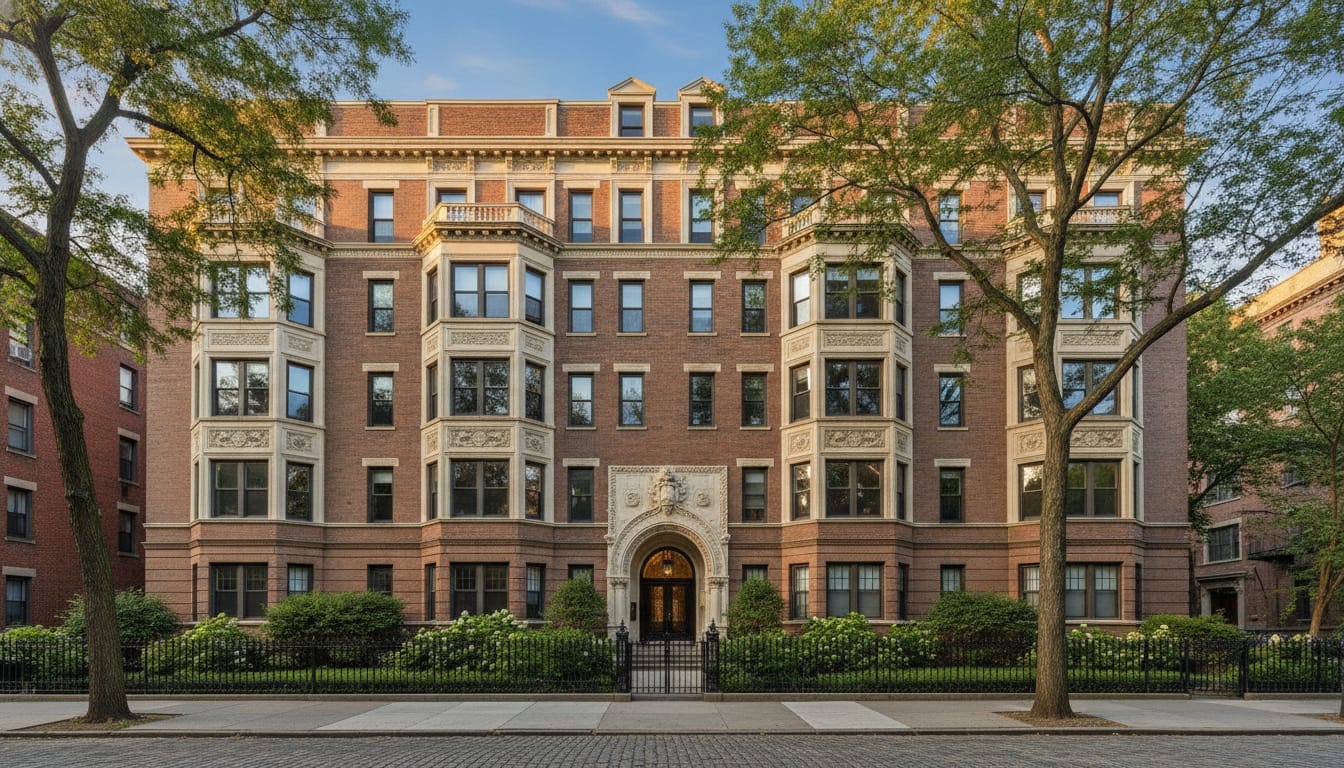
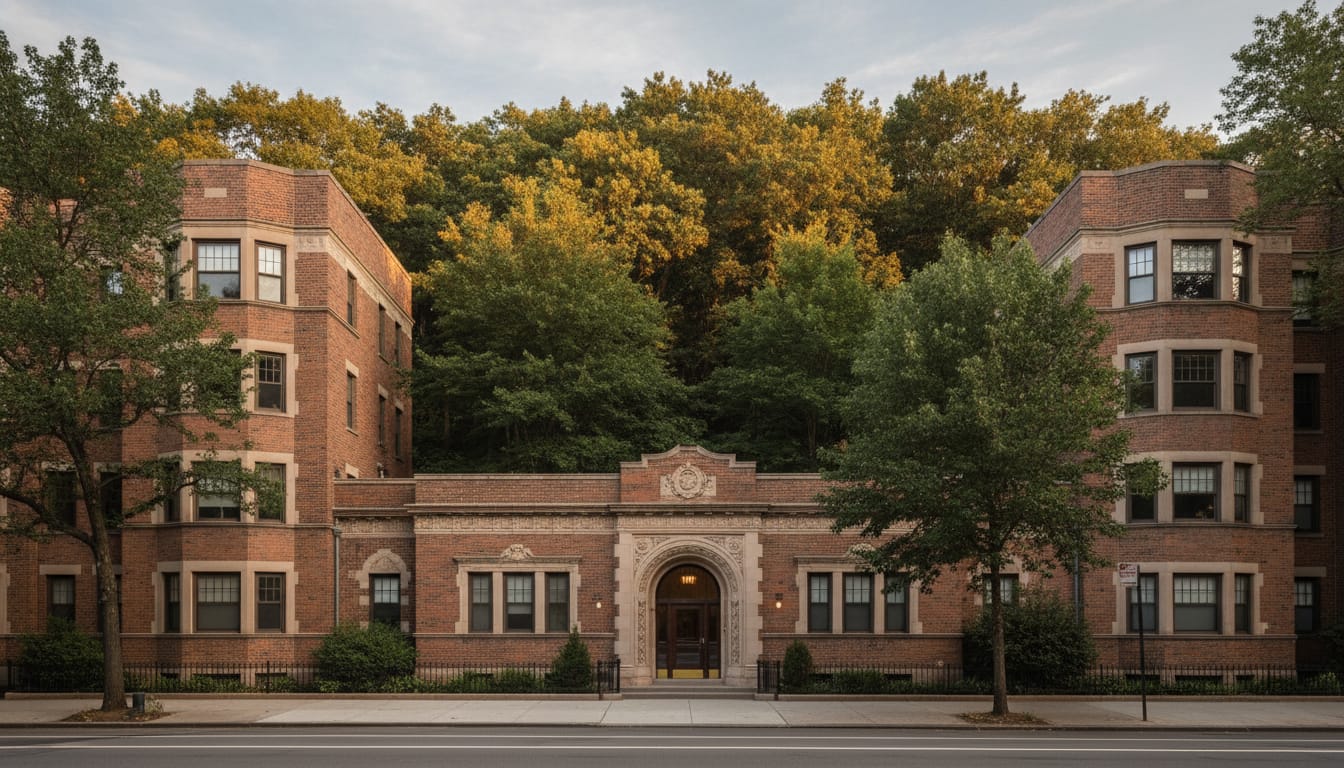
Washington Heights co-ops closed at a median of roughly $490,000 in the first five months of 2026, while the Manhattan-wide median sat at $1,225,000. That is a gap of more than 60 percent for apartments that are often larger, in pre-war buildings with real bones, served by three subway lines. I was born in this neighborhood. I have closed 161 transactions in Washington Heights alone, and another 221 in Inwood directly north. In the years since my first deal here in 2001, I have watched that discount narrow, then widen, then narrow again, and I can tell you what is actually driving it right now and whether it closes.
The short version: the discount is real, it is structural, and it is not going away fast. But buyers who understand why it exists are the ones who buy well here. Everyone else either overpays chasing what they think is a deal, or passes and regrets it three years later when the numbers have moved against them.
The Price Picture, Honestly
PropertyShark's monthly data for 2026 shows the range: January at $475K, March at $525K, April at $533K, May at $480K, with a Q2 median of $529K. Monthly volume is thin, typically 17 to 26 closings, so individual large or small deals can swing the median by $30K in either direction. The trend line across the past three years is up, from a range closer to $440K in 2022, but it is not vertical.
Price per square foot tells a steadier story. Washington Heights co-ops have been trading between $590 and $730 per square foot this year, with most deals landing around $650. That compares to roughly $1,263 per square foot Manhattan-wide. You are paying about half the per-foot cost of average Manhattan inventory for apartments that, in many cases, are larger than the borough average.
Northern Manhattan PSF Hierarchy: 2026
| Neighborhood |
Median PSF |
vs. WaHi |
| Morningside Heights | $1,287 | +98% |
| West Harlem / Manhattanville | $850-866 | +31-33% |
| Hamilton Heights | $720 | +11% |
| Washington Heights | $638-712 | baseline |
| Inwood (north of WaHi) | ~$850 | +20-33% |
Sources: StreetEasy, Realtor.com, Shapot Team 2026. Inwood figures reflect newer condo product from 2018 rezoning activity.
That Inwood figure is worth explaining. Inwood sits directly north of Washington Heights and trades at a higher PSF than Washington Heights right now, roughly $850 per foot. That is counterintuitive for buyers who assume prices fall as you go further north. The 2018 Inwood rezoning unlocked waterfront and Broadway corridor development, and newer condo product has pulled the neighborhood average up. Washington Heights has no equivalent new construction catalyst, which is partly why the per-foot discount persists.
How the Price Gap Opened and Whether It Closes
I have been in this neighborhood long enough to remember when the price gap versus Harlem was barely discussed because both areas were priced so far below the Manhattan median that the comparison felt academic. That changed around 2012 and 2013. Harlem had already appreciated 50 to 100 percent from its 2005 baseline, and buyers priced out of Morningside Heights and West Harlem started looking north. Washington Heights became the logical next step in the affordability gradient.
The second acceleration came between 2016 and 2018. Hamilton Heights and Manhattanville began trading at $700 to $800 per square foot, which redirected another wave of buyers further north. The co-op median in Washington Heights went from roughly $430K in 2016 to approximately $525K by 2019, then pulled back when interest rates began their climb in 2022 and 2023 before stabilizing at today's levels.
The gap closes slowly for structural reasons, not cyclical ones. The dominant housing stock is pre-war co-op. Co-ops cannot be redeveloped easily. The income-restricted HDFC segment puts a ceiling on a portion of prices by design. New condo construction, which would introduce higher-priced comparables, requires financing that does not yet pencil at Washington Heights land values. The discount narrows when enough buyers run out of options in the neighborhoods below it, which has happened twice and will happen again.
The Micro-Geography: Not One Market
Washington Heights runs from 155th Street north to Dyckman at 207th. Having sold across all of it since the early 2000s, I think about it in two distinct sub-markets.
Hudson Heights (181-190 St, west of Broadway)
- Median listing ~$559K, PSF ~$670 (Realtor.com, June 2026)
- Fastest turnover in the neighborhood: ~57 days on market
- Fort Tryon Park, The Cloisters, pre-war elevator buildings
- A express at 181 St, fastest Midtown access in Upper Manhattan
- Active new development: 12-story permit filed Fort Washington Ave, May 2025
Fort George & Central WaHi (155-181 St)
- Median listing ~$475-527K, PSF ~$572-613
- Highest HDFC concentration in the neighborhood
- 168 St hub: A, C, and 1 all stop here
- NewYork-Presbyterian anchor draws institutional buyers
- Most price-accessible entry point in Manhattan
Hudson Heights commands a premium of roughly 10 to 18 percent above Fort George on comparable square footage. I represented a buyer on a 2-bedroom co-op at 15 Fort Washington Avenue that closed at $399,000, doorman building, Washington Heights, a price that in any other neighborhood below 96th Street would buy a studio. Buyers who do not know the blocks conflate these sub-markets and overpay on the wrong side of Bennett Avenue. Buyers who do use that confusion to buy well.

Active Washington Heights Listings
Co-ops and condos currently for sale in Washington Heights
View All
Listing information provided courtesy of the Real Estate Board of New York's Residential Listing Service (RLS).
Information is deemed reliable but not guaranteed. Sale listings verified.
©2026 REBNY. RLS data displayed by Keller Williams NYC.
Why 85 Percent of What Sells Here Is a Co-op
December 2025 StreetEasy data recorded 23 closings in Washington Heights. Every single one was a co-op. This is not an anomaly; it reflects the underlying housing stock. Washington Heights is 99 percent multi-unit buildings, 88 percent renter-occupied, with the owner-occupied 12 percent concentrated almost entirely in pre-war co-op conversions. There is almost no condo product by volume, and what little exists trades at a meaningful premium: a 2-bedroom condo in the neighborhood runs around $650K while a comparable co-op is around $425K.
Co-ops trade at a discount to condos everywhere in Manhattan for three reasons: board approval risk, financing restrictions (many buildings cap loans at 75 to 80 percent of the purchase price), and resale constraints from sublet policies and flip taxes. In Washington Heights, you apply that co-op discount on top of an already-affordable starting base. That stacking effect is why the neighborhood looks like such a deep discount on paper. Some of it is real opportunity. Some of it is priced-in friction that affects your exit as much as your entry.
The HDFC Factor
A significant portion of Washington Heights co-op stock is HDFC, Housing Development Fund Corporation. I have sold dozens of them since my early years in real estate, and they operate under rules most buyers have never encountered before.
Maintenance fees on HDFC units typically run $500 to $900 a month, all-in including real estate taxes and utilities, compared to $800 to $1,400 on market-rate co-ops. That sounds attractive until you understand what it costs. Income limits apply. Most Washington Heights HDFCs are set at 80 to 120 percent of Area Median Income, which translates to roughly $95,000 to $163,000 for a one-to-two person household under 2026 HUD figures. Flip tax provisions on resale commonly return 30 percent of profit to the building corporation. Subletting is heavily restricted, and the income limits extend to any subtenant even during the rare approved sublet.
The HDFC Sequence Is Different
HDFC co-ops often require board approval before you sign a contract, not after. Not all HDFCs in Washington Heights use the same formula. Some cap at 80 percent of AMI. Some at 120 percent. Some use an older Section 576 calculation that ties your limit to a multiple of the monthly maintenance. I ask about HDFC status on the first call because it changes the entire transaction sequence. I have had buyers lose deals after going to contract without confirming their income qualified under that building's specific formula.
What the Board Actually Wants to See
In 161 closed transactions in Washington Heights, I have put together more board packages in this neighborhood than most brokers see in a career. The financial thresholds are the same as the rest of Manhattan: debt-to-income at or below 25 to 28 percent, post-closing liquidity of at least one to two years of maintenance in accessible savings, minimum 20 percent down (many buildings require 25 to 30 percent), and a full package including two to three years of tax returns, six months of bank statements, employment verification, and personal and professional references. Most boards conduct an in-person interview. No board is required to provide a reason for rejection.
First-time buyers make up a larger share of purchasers in Washington Heights than in almost any other Manhattan neighborhood, which means many people applying to these boards have never assembled a co-op package before. The boards know this. They tend to be thorough rather than intimidating. A well-organized package with a clear financial story gets approved. A scattered package with unexplained deposits or gaps in employment history creates questions that take weeks to resolve.
What the Market Looks Like Right Now
The 2025 Manhattan market report from DeFalco Realty specifically named Washington Heights as one of the areas where first-time buyers and career-stage buyers found co-op entry points when Harlem and the Upper West Side moved past their reach. Three categories dominate the buyers I am working with: first-time buyers using conventional or FHA financing who want to stay in Manhattan; community-rooted buyers, often Dominican-American families who have rented in the neighborhood for years; and small investors drawn to the multifamily stock north of 155th Street.
To put a number on it: I have closed sales at 3810 Broadway at price points ranging from a 1-bedroom co-op at $210,000 to a 5-bedroom co-op that closed at $450,000. That spread on one building, in a neighborhood where the median is around $490,000, tells you how wide the range is depending on size, condition, floor, and maintenance history. On the rental side, recent units I have placed along Riverside Drive and Fort Washington Avenue have rented in the $2,150 to $3,200 range for 1- to 3-bedroom apartments, which is where the rent-to-price math starts to favor buying for anyone planning to stay five or more years.
Rental inventory in Washington Heights dropped roughly 66 percent year-over-year as of late 2025, making it increasingly difficult to find an apartment to rent here. That compression converts renters into buyers. When the rental market tightens enough, the calculus shifts, and we are seeing that shift happen in real time.
Questions Worth Asking Before You Make an Offer
These come from deals that went wrong before I started asking them upfront. I ask all of them before a second showing.
- Is this building HDFC, and if so, which income formula applies to this specific building?
- What is the current maintenance, when was it last raised, and what is the five-year trend?
- Does the building carry an underlying mortgage, and when does it mature?
- Have there been special assessments in the past three years, and are any being discussed now?
- What is the reserve fund balance relative to the number of units?
- What is the sublet policy and how actively is it enforced?
- What is the flip tax on resale?
A seller or listing broker who cannot answer these questions is telling you something. The building's proprietary lease and financials will eventually answer them in due diligence, but knowing before you spend time and money on a board application is worth every minute of the upfront conversation.
Thinking About Buying in Washington Heights?
I have been selling this neighborhood since 2001. Let's look at what is available and whether it fits your numbers.
Talk to Milton
Washington Heights is a neighborhood I have been selling for as long as I have been in real estate. My first apartment was in this zip code. The market right now is the most accessible it has been relative to the rest of Manhattan in years, and the buyers showing up are serious. For the live price data, the Washington Heights market report is updated regularly. For the co-op board mechanics, see my guide on buying a Washington Heights co-op, and for anyone comparing their options, the co-op vs. condo breakdown covers the key decision points.
Get NYC market insights delivered to your inbox
New listings, market data, and expert analysis. No spam.
We respect your privacy. Unsubscribe at any time.