A renovated four-story brownstone in Park Slope sold for $4.85 million in February 2026, while a comparable fixer-upper in Bed-Stuy closed at $1.35 million the same month. That $3.5 million spread across just a few subway stops illustrates why buying a brownstone in NYC demands neighborhood-level precision. As a Licensed Real Estate Associate Broker with Keller Williams NYC, I have helped buyers through brownstone purchases across Manhattan and Brooklyn for over 25 years, and the due diligence on these properties is fundamentally different from buying a co-op or condo.
This guide covers what defines a brownstone, where to find them at different price points, the structural issues unique to these 100+ year-old buildings, landmark restrictions, financing considerations, and renovation budgeting. Whether you want a single-family home or an investment property with rental income, buying a brownstone in NYC is one of the most rewarding purchases you can make, if you go in with the right information. Before you make an offer, pull the ownership history and any outstanding liens using ACRIS, NYC's free property records search.
What Exactly Is a Brownstone?
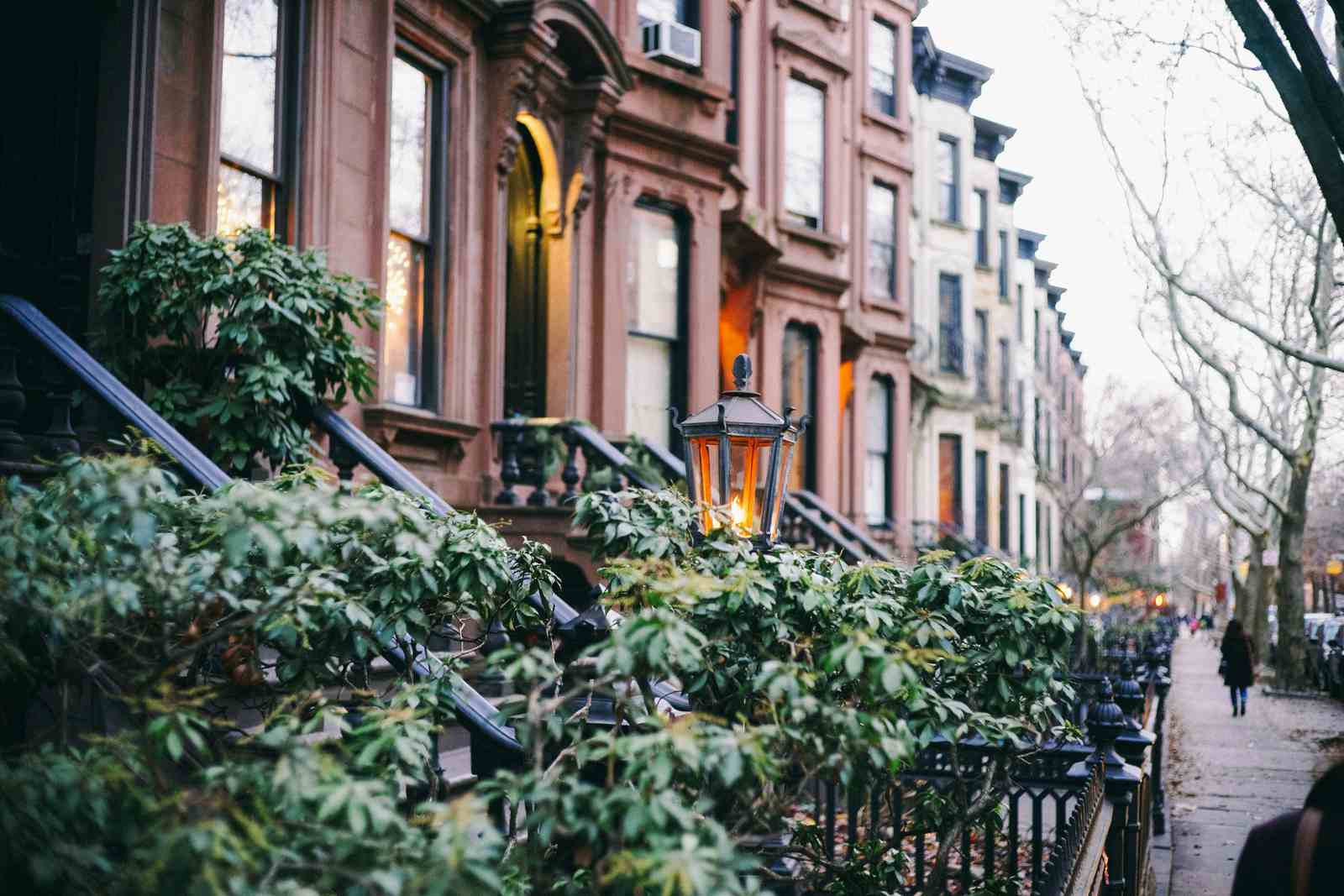
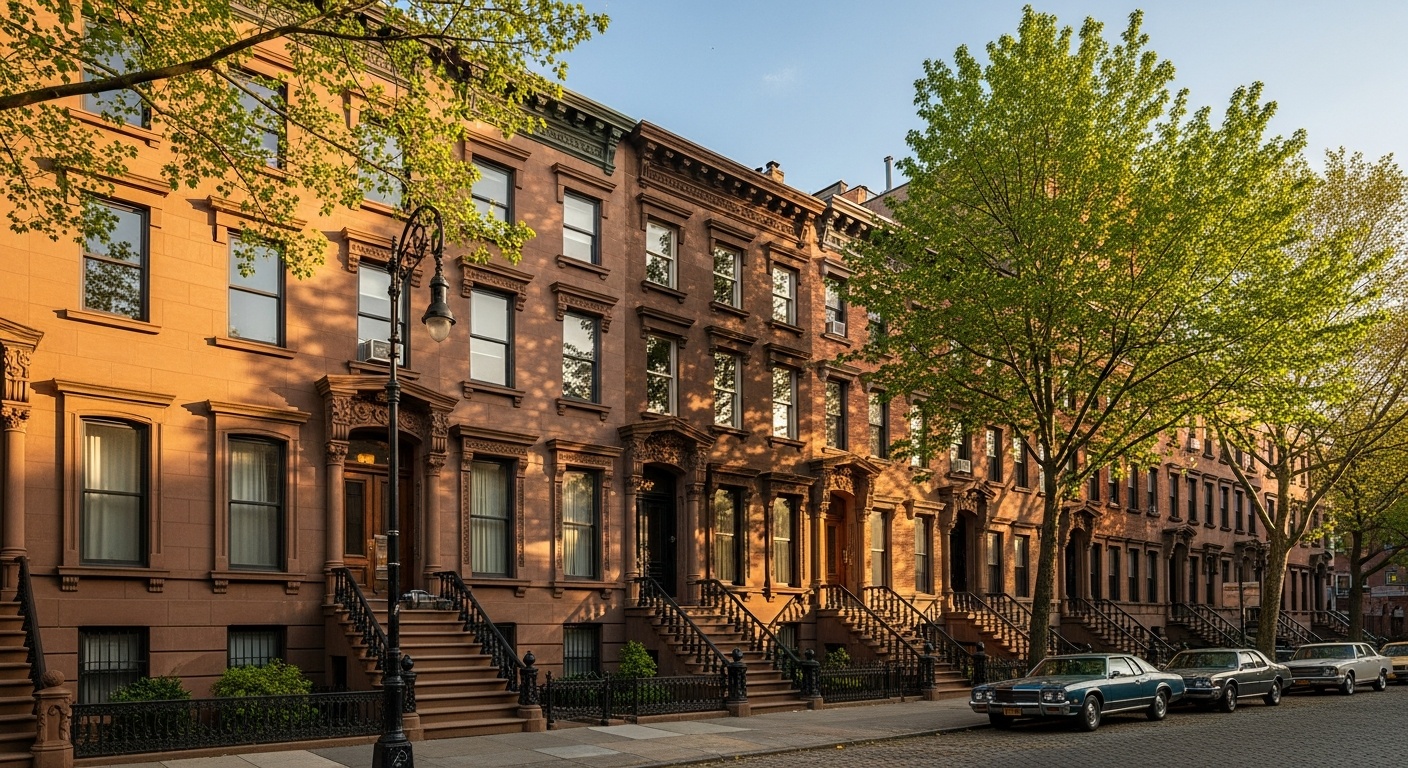
A brownstone is a row house clad in brown sandstone, typically built between the 1840s and 1890s. The term refers specifically to the facade material, not the building type. Most NYC brownstones are three to five stories tall, 16 to 25 feet wide, and 40 to 50 feet deep. They feature a high stoop leading to the parlor floor, a garden level (sometimes called a basement apartment), and upper floors that were originally bedrooms. Many have been subdivided into multiple units over the decades, and some remain single-family homes.
Not every townhouse is a brownstone. Limestone-fronted row houses, brick row houses, and frame houses are distinct property types, though the real estate market often groups them together. True brownstone neighborhoods are concentrated in specific areas of Manhattan and Brooklyn.
Where to Find Brownstones in NYC
| Neighborhood |
Borough |
Price Range (2026) |
Avg. Width |
Landmark District? |
| Park Slope |
Brooklyn |
$3.2M - $8M+ |
18-25 ft |
Yes (most blocks) |
| Bedford-Stuyvesant |
Brooklyn |
$1.2M - $3.5M |
18-20 ft |
Partial |
| Fort Greene |
Brooklyn |
$2.5M - $5M |
18-22 ft |
Yes |
| Harlem |
Manhattan |
$1.5M - $4.5M |
16-20 ft |
Partial |
| Hamilton Heights |
Manhattan |
$1.3M - $3M |
16-20 ft |
Yes |
| Crown Heights |
Brooklyn |
$1.4M - $3.5M |
18-20 ft |
Partial |
Structural Inspection: What to Look For
Brownstone buildings are 130 to 180 years old. That age creates specific structural concerns you will not encounter with a newer condo or co-op. Before signing a contract, always hire a structural engineer in addition to a standard home inspector. Here are the critical areas I tell every buyer to focus on.
Foundation and Party Walls
Most brownstones sit on brick or rubble stone foundations. Cracks in party walls (the shared walls between row houses) can indicate settling, water damage, or prior structural failure. A bulging party wall is a serious red flag that can cost $50,000 to $150,000 to stabilize.
Facade Condition
The brownstone facade itself deteriorates over time. Spalling (surface flaking), delamination, and water infiltration behind the stone are common. Restoration contractor estimates put a full stone facade restoration at $85,000 to $250,000 or more, with lighter repointing work often landing between $20,000 and $100,000, depending on building width and how much stone replacement the condition actually requires. NYC's Local Law 11 (now called FISP, the Facade Inspection Safety Program) requires facade inspections every five years for buildings over six stories, but even shorter brownstones benefit from professional assessment before purchase.
Roof and Drainage
Flat roofs on brownstones need replacement every 15 to 25 years. Budget $15,000 to $40,000 for a new roof. Check for proper drainage to the street; many brownstones have decades-old clay drain pipes that crack and cause basement flooding. A sewer scope inspection ($300 to $500) is one of the smartest investments you can make before closing.
Brownstone Inspection Budget
Plan for these inspection costs before making an offer:
- General home inspection: $800 - $1,500
- Structural engineer report: $1,500 - $3,000
- Sewer scope: $300 - $500
- Termite/pest inspection: $200 - $400
- Environmental (lead, asbestos): $500 - $1,200
Total: $3,300 - $6,600. This investment can save you six figures in hidden repair costs.

Townhouses & Single-Family Homes
Brownstones and townhouses in Manhattan and Brooklyn
View All
Listing information provided courtesy of the Real Estate Board of New York's Residential Listing Service (RLS).
Information is deemed reliable but not guaranteed. Sale listings verified.
©2026 REBNY. RLS data displayed by Keller Williams NYC.
Landmark Considerations
Many of NYC's brownstone neighborhoods fall within historic landmark districts designated by the Landmarks Preservation Commission (LPC). If your brownstone is landmarked, any exterior changes, including window replacements, stoop repairs, facade alterations, and rooftop additions, require LPC approval. This process adds 3 to 6 months to renovation timelines and limits your design choices. Interior changes do not require LPC approval unless the building has an individually landmarked interior, which is rare for residential brownstones.
Landmark status is not necessarily a negative. It protects your investment by preventing neighboring buildings from making changes that would diminish the block's architectural character. Properties in landmark districts often hold their value better during market downturns for exactly this reason. Brooklyn Heights is the oldest case study in the city: it was designated on November 23, 1965 as the first historic district in New York, and my Brooklyn Heights townhouse guide walks through what that means for permits, diligence, and price.
Financing a Brownstone NYC Purchase
Financing a brownstone differs from financing a condo or co-op. Most lenders treat brownstones as 1-4 family homes, which opens up standard residential mortgage products. If the property has four or fewer units, you can use a conventional mortgage with as little as 10% to 20% down. For a detailed look at mortgage preparation, see my NYC mortgage pre-approval guide.
If you plan to renovate, consider an FHA 203(k) loan or a construction-to-permanent loan that rolls renovation costs into the mortgage. These products let you borrow based on the projected after-renovation value, which is especially useful for brownstones that need significant work. Renovation loans require detailed contractor bids and draw schedules, so plan for a longer closing timeline of 60 to 90 days.
Renovation Costs and ROI
Brownstone renovation costs in NYC range dramatically based on scope. Brick Underground's renovation guide prices a full gut renovation with mid-range materials at $250 to $300 per square foot, and puts the systems, kitchen, and bathroom work on a 3,200-square-foot brownstone at $800,000 to $960,000. A lighter cosmetic refresh, paint, fixtures, and floor refinishing, runs well below that per-square-foot rate. For the full scope-by-scope breakdown, permit timelines, and financing options, see my brownstone renovation cost guide.
The ROI depends heavily on neighborhood and configuration. A legal garden apartment in a well-renovated brownstone in Hamilton Heights adds rental income that can offset a meaningful share of the mortgage, and the exact number comes down to the unit's size and finish level against comparable rentals on the same block. I work with buyers to model these income scenarios before they make offers, because the rental income potential often determines which brownstone makes the most financial sense. For more on this approach, read my multi-family investing guide.
Brownstone Buying Checklist
Before Making an Offer
- Verify zoning (residential, commercial overlay, R6 vs R8)
- Check landmark status with LPC
- Review Certificate of Occupancy for legal unit count
- Research building violations on NYC DOB BIS
- Get pre-approved for townhouse financing
During Due Diligence
- Hire structural engineer (not just home inspector)
- Run sewer scope inspection
- Get contractor bids for known issues
- Review survey for encroachments and easements
- Confirm property tax class and abatements
Buying a brownstone in NYC is one of the most complex transactions in residential real estate, and also one of the most rewarding. The combination of architectural character, rental income potential, and long-term appreciation makes brownstones a compelling investment across every market cycle. If you are considering a brownstone purchase, contact me for a consultation and I will help you evaluate properties with the structural, financial, and neighborhood expertise these buildings demand.
Get NYC market insights delivered to your inbox
New listings, market data, and expert analysis. No spam.
We respect your privacy. Unsubscribe at any time.